A Korea eSIM:
data yes, Korean number no
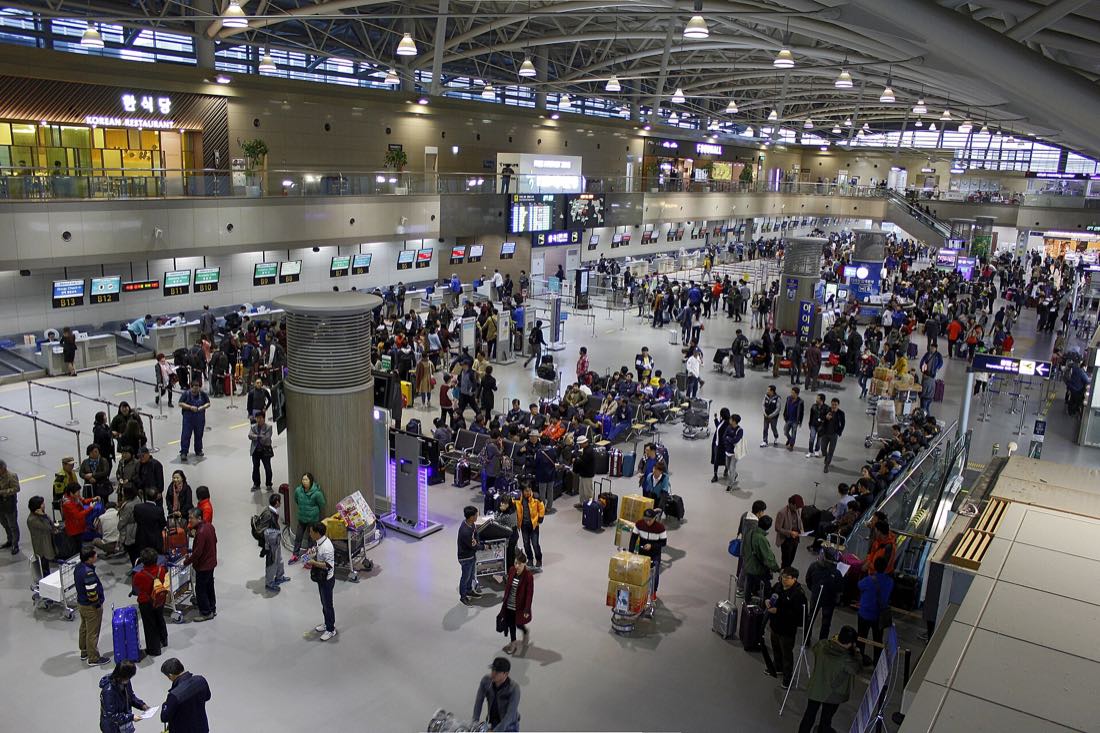
Busan is a navigation-dependent city and Korea is a data-dependent country: your trip runs through Naver Map, Papago's camera translation and CatchTable bookings, all live services from minute one. An eSIM installed at home means data the moment the wheels touch Gimhae — no arrivals-hall counter queue. Know its one hard limit: it gives you data only, no Korean phone number, so Kakao T's Korean-phone verification stays out of reach either way.
What Korea actually needs your data for
Why it matters hereThis isn't a check-email-at-the-café country. Google Maps has historically been crippled in Korea, so navigation means Naver Map, live, all day. Menus are Papago's camera. Restaurant tables are CatchTable, whose Busan bookings grew 290% in H1 2026. The drone show's seasonal showtimes live on a website you'll check that afternoon. Every one of these dies without a connection.
Add the quiet workhorses — your bank's fraud texts when a Korean terminal surprises it, the e-Arrival Card confirmation, hotel check-in emails — and 'I'll find Wi-Fi' stops being a plan. Busan's free Wi-Fi is real but won't follow you up Hwangnyeongsan or into the market alleys where you actually need Papago.
eSIM vs airport counter vs roaming
The three routesAll three get you online. They differ in when, and in how much of your first hour they eat.
| Route | Working from | The catch |
|---|---|---|
| eSIM, bought at home | Wheels-down at Gimhae | Phone must be unlocked and eSIM-capable — check both before buying, not at the gate |
| Airport SIM counter | After the queue | Counters keep business hours and queues form behind every landing wave — a late arrival can miss them entirely |
| Home-carrier roaming | Instantly | Per-day rates stack up fast across a 3–7 day trip; fine as a backup, expensive as a plan |
The 10-minute version: install the eSIM at home over good Wi-Fi, keep your home SIM active for bank texts, flip data to the eSIM on landing.
What an eSIM won't fix
The fine printData solves most of Korea. These three things need what a tourist eSIM doesn't carry — a Korean phone number.
Signup wants Korean-phone verification, and the app's foreign-card support is unverified on top. No eSIM changes that. The fix costs nothing: street-hail (flagfall ₩4,800) or have the hotel desk call.
Full taxi reality at /getting-around-busan/Naver's 'Foreigner Setting' (July 2026) lets restaurants decline foreign accounts regardless of your connection. CatchTable, a phone call, or walking in at open are the 3 fallbacks that work.
Local delivery apps and some memberships want an 010 number. None are trip-critical — every visitor essential on this site runs on data alone.
Data, done before the airport
Sort it nowFive minutes at home versus a queue after an 11-hour flight. Easy call.
Korea eSIM questions, answered
FAQPage schema pairedDo I need an eSIM for Korea?
If your phone is unlocked and eSIM-capable, it's the best answer available: Korea's visitor stack — Naver Map, Papago, CatchTable — is useless offline, and installation takes about 5 minutes at home. If your phone can't take one, the airport counter is the fallback, queue included.
How much data do I need for a Korea trip?
Navigation and camera translation are the hungry ones — budget roughly 1–2 GB per week for maps, Papago and bookings, and double it if you stream or hotspot. Buying one size up costs less than running dry above Gamcheon's stairs with no bars and no Hangul.
Can I buy a SIM at Gimhae Airport instead?
Yes — telecom counters operate in the arrivals area — but they keep business hours and every landing wave queues in front of you. An eSIM costs you 0 minutes of that, which matters most on the late arrivals covered in the Gimhae guide.
Does an eSIM give me a Korean phone number?
No — tourist eSIMs are data-only. That locks out Kakao T's Korean-phone verification, so plan taxis the analog way: street hail at ₩4,800 flagfall, taxi ranks, or the hotel desk. Everything else a visitor needs runs happily on data alone.
Will Kakao T work with my foreign setup?
Assume no: signup wants Korean-phone verification and foreign-card support is unverified. It's the one gap in an otherwise seamless transit city — and with the metro at about ₩1,600–1,800 a ride, you'll miss it less than you think.
Does Naver Map work offline?
Plan on live data — routing, transit times and place search are all server-side, and that's precisely the job the eSIM exists to do. With data, Naver plus Papago covers a 3-day Busan trip with essentially zero Korean.
Do I need mobile data for the e-Arrival Card or K-ETA?
The paperwork won't strand you: the free e-Arrival Card is filed online within 72 hours of arrival — any Wi-Fi does it — and a K-ETA (₩10,000, ~$7, for the nationalities that still need one) happens before you fly anyway. Where the eSIM earns its keep is the moment after immigration, when Naver Map and the taxi-versus-rail decision want live data. The entry rules themselves are unpacked at K-ETA and the e-Arrival Card.
Can I book restaurants in Korea with a data-only eSIM?
Yes — CatchTable works on data with a foreign account, and Busan bookings on it grew 290% in the first half of 2026 for exactly this reason. The wrinkle is Naver: since July 2026 its 'Foreigner Setting' lets restaurants block foreign accounts from booking, so the fallbacks are CatchTable, a phone call, or walking in at opening time. Where to aim those bookings is the business of the food pages.