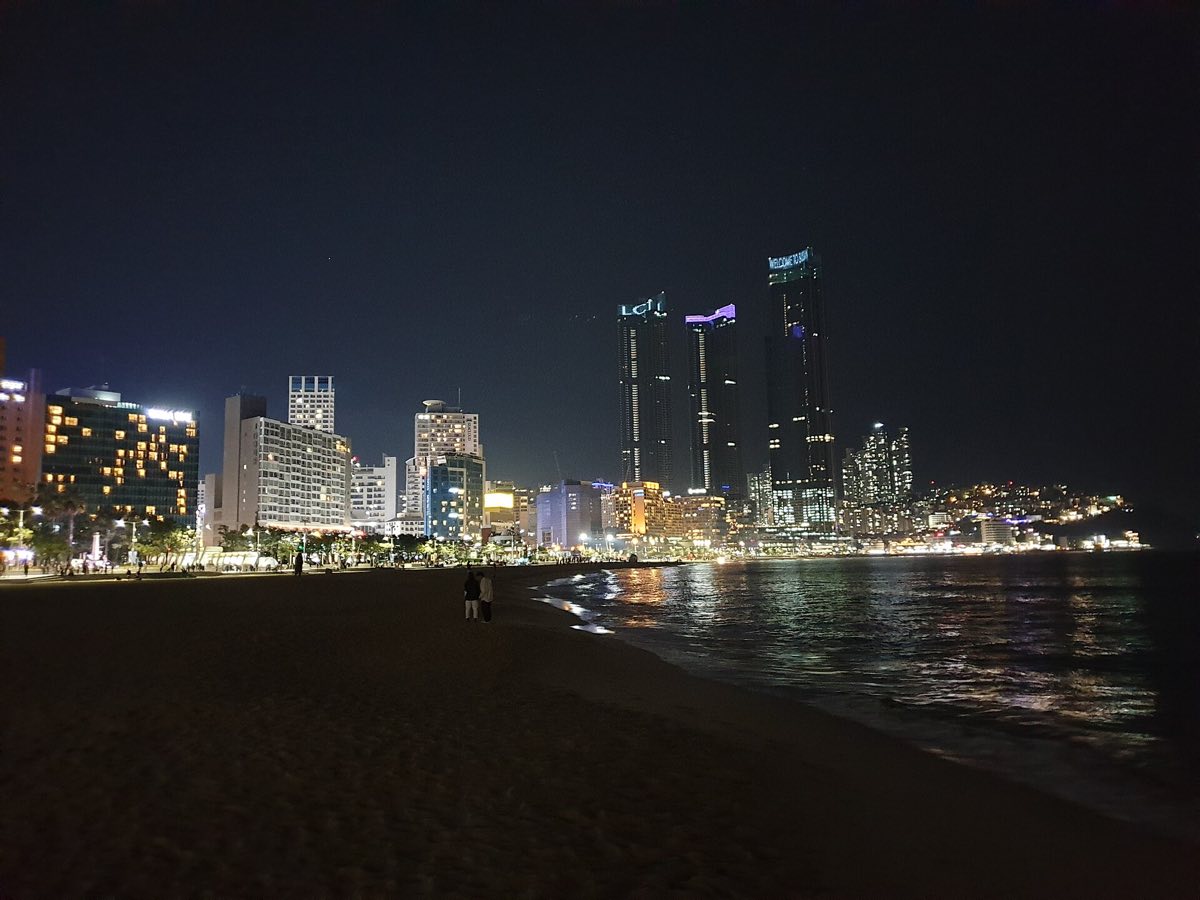
Busan or Jeju?
The car decides.
This is the most honestly contested decision in Korean trip planning, and it collapses to a driving licence. Jeju is built for a rental car — volcanic coast, waterfalls and craters strung out with thin public transit between them. Busan runs 4 metro lines plus the Donghae Line for ₩1,600–1,800 (~$1.10–1.25) a ride. The community verdict, repeated for years: "Busan is significantly cheaper, has better food, and much more public transit friendly." Nature-first travellers who'll happily drive should still pick Jeju.
Who wins, by traveller
Match yourselfNot renting a car
Busan hands you 4 metro lines, the Donghae Line and ₩4,800 (~$3.40) taxi flagfalls. Jeju without wheels means long bus waits and a trip built around what's reachable, not what's best. Full verdict →
Renting, nature comes first
Volcanic cones, lava tubes, waterfalls and Korea's highest peak — with a car, Jeju out-natures anything Busan can answer with. Busan's best outdoors is a city coastal walk, not a national park.
Food is the trip
Dwaeji gukbap at ₩5,500–9,000 (~$4–6.30), Jagalchi's pick-your-fish theatre, 4 Michelin stars. Jeju's black pork and seafood are good; Busan's food scene is a reason to fly to Korea. Full verdict →
Short trip, no fixed interests
Busan bolts onto a Seoul trip with one 2h35m train — no flight, no rental counter, no weather anxiety. Jeju punishes improvisers; Busan forgives them. Full verdict →
Busan vs Jeju, line by line
Side by side| Busan | Jeju | |
|---|---|---|
| Getting there | KTX 2h35m · ₩59,800 (~$42), or fly into Gimhae | Flight only — about 1 hour from Gimhae or Gimpo |
| Getting around | 4 metro lines + Donghae Line, ₩1,600–1,800 (~$1.10–1.25)/ride | Rental car strongly assumed; buses exist but eat your day |
| Food | Refugee-cuisine canon, 20 Bib Gourmands, hoe at ₩30,000–50,000pp (~$21–35) | Black pork, seafood — good, thinner bench |
| Cost | Cheaper across the board once a car isn't in the ledger | Car hire + fuel + flight stack up fast |
| Beaches | 7 city beaches — urban, with the port honesty below | Prettier water, quieter sand |
| Nature | Coastal trails like Igidae — excellent for a city | A volcanic island; a different league |
| Nightlife and spectacle | Gwangalli bars + a free drone show every Saturday | Quiet nights — that's partly the point |
| Verdict for most first-timers | WORTH IT | DEPENDS |
The port honesty, because Jeju partisans always raise it and they're not wrong: The most-repeated criticism of Busan's beaches is the port: you are swimming in the water of Korea's largest export terminal. Water quality is monitored and the beaches pass, but if pristine water is the point of your trip, Busan's beaches are city beaches — treat them as scenery with swimming attached, not the other way round.
Doing both — and the luggage problem
The logistics nobody printsOn two weeks, the community template is "1 week Seoul, 2 days Gyeongju, 3 days Busan, 3 days Jeju" — and it works because Gimhae flies to Jeju in about an hour, so Busan is the natural launchpad rather than a detour. Book that leg early in peak season; it's a commuter-scale route.
One thing Korea does not have: a door-to-door luggage-forwarding culture. Nobody is shipping your suitcase to the next hotel while you day-trip. You carry everything onto the KTX and the Jeju flight yourself — one more argument for packing light, and for the single-base strategy once you're in Busan rather than hotel-hopping down the coast.
Book the version you picked
Commit to an answerIf Busan won, start with the bed. If Jeju won — or you're doing both — price the flights before anything else; they move more than hotels do.
Busan or Jeju — asked and answered
FAQPage schema pairedBusan or Jeju for a first trip to Korea?
Busan for most first-timers: it bolts onto Seoul with one 2h35m train, needs no rental car, and 3 nights covers it well. Jeju rewards a dedicated nature trip with a car — as a first-trip add-on it's a flight, a rental counter and weather risk stacked onto an already-full itinerary. Full first-trip maths: is Busan worth visiting.
Can I do Jeju without a car?
You can, but the island fights you: the sights are spread along the whole coastline with bus connections that turn 3-sight days into 1-sight days. Busan is the opposite — 4 metro lines, the Donghae Line, and every page on this site lists the exact station and exit. If you won't drive, that contrast is your answer.
Is Busan cheaper than Jeju?
For a carless traveller, clearly: no rental, no fuel, no flight, transit at ₩1,600–1,800 a ride and a food day from ₩25,000–40,000 (~$17.50–28) if you eat at markets. Jeju's costs aren't outrageous, but the car-plus-flight base load starts the meter before you've seen anything.
Can I do both Busan and Jeju in one trip?
Yes, and the order matters: Seoul → Busan by KTX, then the roughly 1-hour flight from Gimhae to Jeju, then fly out. That routing never backtracks. Give Busan 3 nights and Jeju 3 — fewer than that on Jeju and the car logistics eat the trip. Busan's 3 days: the itinerary.
Which has better beaches, Busan or Jeju?
Jeju, for water quality and setting — Busan's are city beaches beside Korea's largest port, monitored and passing, but urban. What Busan's 7 beaches offer instead is everything around them: the drone show, the bars, the Blueline coast, and a metro stop 5 minutes from the sand. Details: Haeundae Beach, honestly.
Do I need an International Driving Permit for Jeju?
Yes — Korea requires an IDP (1949 convention) alongside your licence to rent, and desks do check. Arrange it before you fly; it's typically same-day at your home automobile association. No car in your plans? Then Busan just won the whole argument — see getting around.
How do I get from Busan to Jeju?
You fly: about 1 hour from Gimhae (PUS), on a route that runs at commuter-scale frequency. Book early for peak summer and blossom dates — it sells like a bus route but prices like a flight — and remember you carry your own luggage; Korea has no forwarding culture. Getting to the airport itself: Gimhae to the city.
Is Busan or Jeju better with kids?
Busan, unless you were renting a car anyway: the aquarium sits right on Haeundae's sand, the Blueline coast and Osiria's luge are one Donghae Line ride away, and every move costs ₩1,600–1,800 (~$1.10–1.25) on the metro instead of a car-seat negotiation. Jeju's nature is superb for kids with wheels — without them, its distances punish everyone. The family base: Haeundae.